Anchor Bolt Manufacturer and Supplier in Pune
Pune Anchor Bolt manufactures anchor bolts, along with related foundation fastening products, for construction, industrial, infrastructure, telecom, and fabrication projects. Based in Talwade, Pune, we work with engineers, contractors, project managers, and procurement teams who need anchor bolts matched to their specific structural or machinery requirements, not a generic off-the-shelf size Anchor bolts are used wherever equipment, structural steel, or building elements need to be securely connected to a concrete base. Share your drawing, dimensions, material preference, and required quantity with our team, and we'll help confirm the right anchor bolt for your project along with a quotation.
What Is an Anchor Bolt?
An anchor bolt is a fastening component used to secure structural elements, machinery, equipment, or other components to concrete or another supporting base. It works by transferring the load applied to the structure or equipment into the foundation, keeping the connection stable under weight, vibration, and everyday operating stress.
The right anchor bolt depends on several factors working together: the load the connection needs to carry, how the bolt will be installed, the environment it will be exposed to, and the material best suited to those conditions. A bolt selected without considering these factors can loosen over time, corrode faster than expected, or fail to provide the holding strength a project actually needs.
This is why anchor bolt selection is a design decision, not just a purchasing one. Sharing your project's load requirements, installation method, and environment with your manufacturer leads to a bolt that performs reliably for the life of the structure or equipment it supports.
Types of Anchor Bolts
Anchor bolts come in a range of shapes and installation methods, each suited to different structural needs:
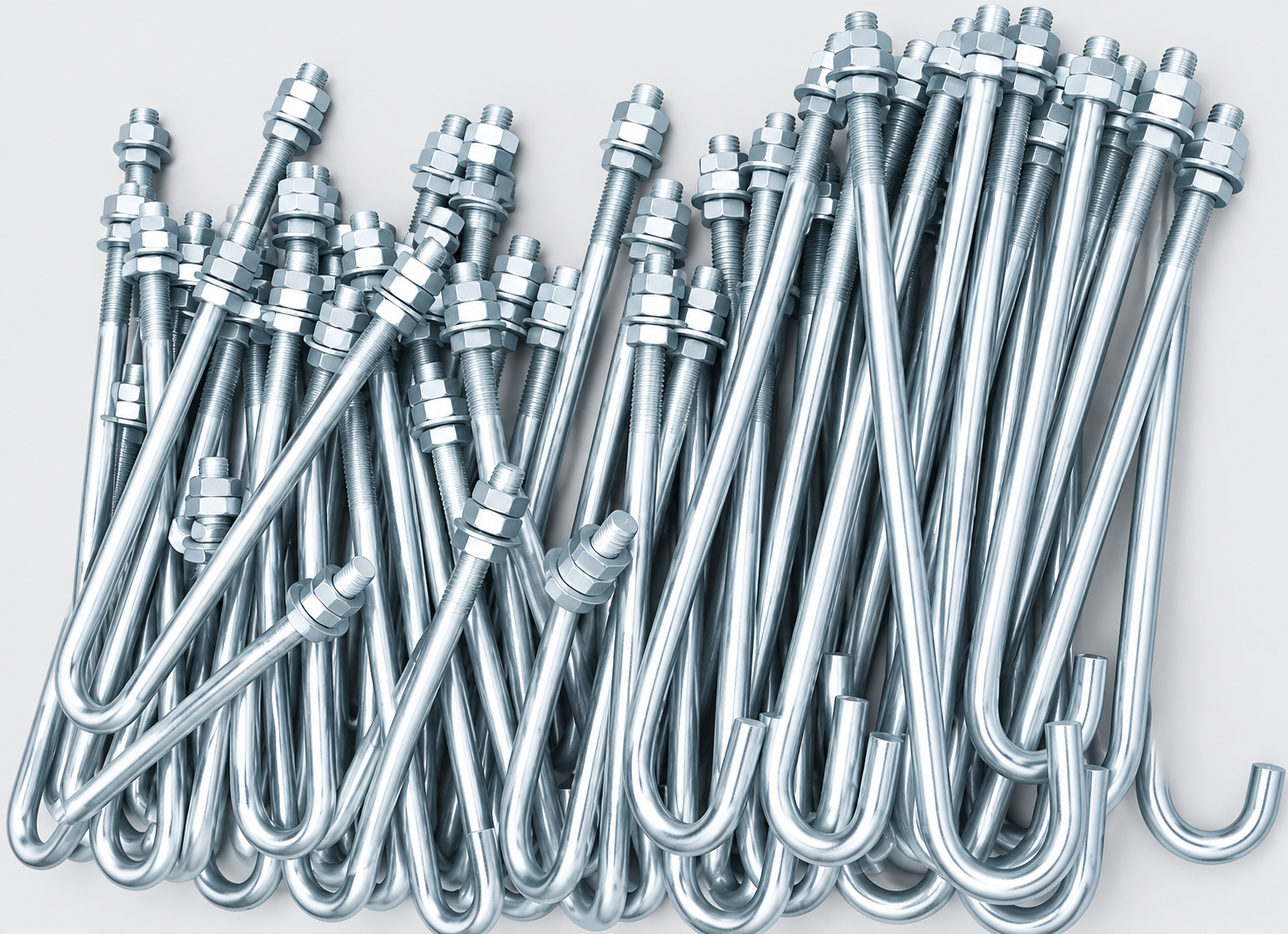
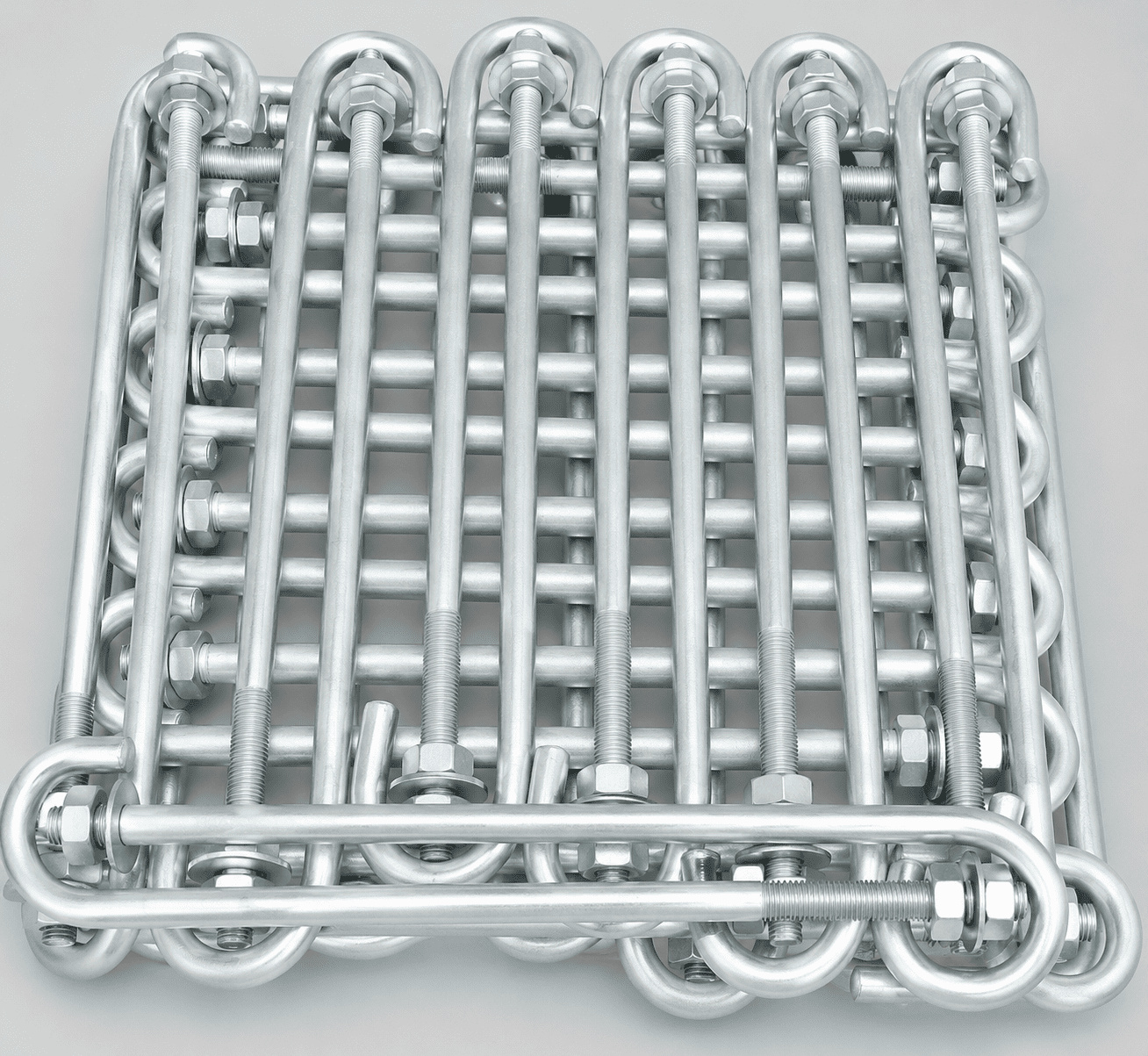
J-Type Anchor Bolt
Has a curved hook end that embeds directly into a concrete pour before the concrete cures, giving strong pull-out resistance. Commonly used for structural columns and machinery bases where the bolt is cast in place from the start.
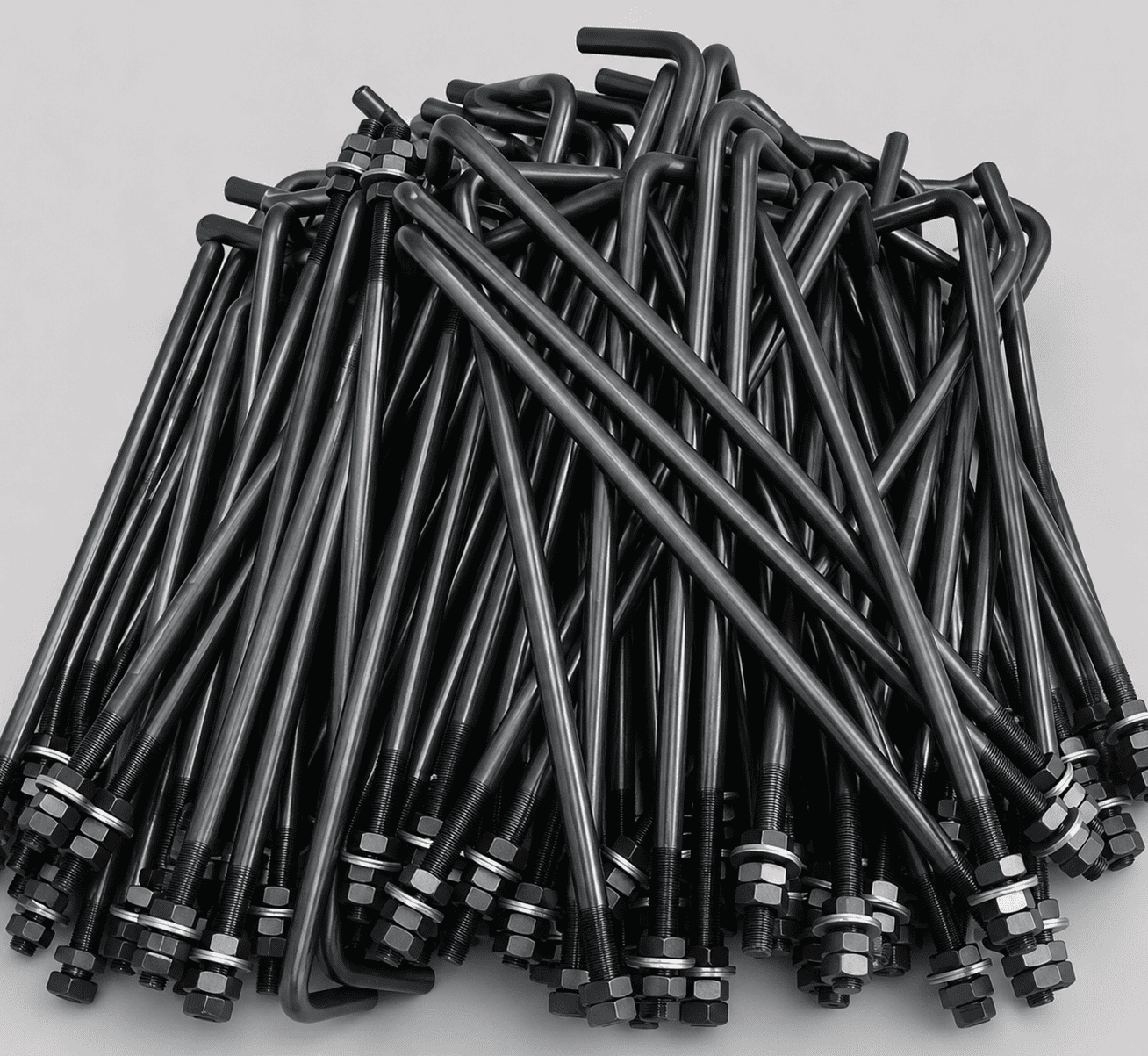
L-Type Anchor Bolt
Uses a simpler bent-end design, cast into the concrete in the same way as a J-type, but suited to lighter to medium anchoring loads where a less pronounced bend provides sufficient holding strength.
Straight Anchor Bolt with Nut and Washer
A straight bolt installed with a base plate, nut, and washer arrangement, often used where a plate-mounted anchoring method fits the installation design better than a hooked or bent embedment.
Wedge-Type Anchor Bolt
A post-installed anchor used in a pre-drilled hole in existing, already-cured concrete. As the bolt is tightened, its wedge mechanism expands against the sides of the hole to create a secure grip, making it a practical option for retrofitting or adding equipment to a structure that's already built.
Cast-in types like J-type and L-type are chosen at the design stage, before concrete is poured, while wedge-type and other post-installed anchors are chosen when equipment or structural elements are being added after the foundation is already in place. Which one fits your project depends on your construction stage and load requirements, and our team can help you work through that decision.
Anchor Bolt Materials
Material selection is one of the most important decisions in specifying an anchor bolt, since it directly affects strength, corrosion resistance, and service life. Key factors to consider include:
Getting this right at the specification stage prevents premature wear or replacement later, so we recommend discussing your application and environment with our team before finalizing your order.
- 01 Strength RequirementsHeavier machinery and larger structural loads generally call for higher-strength steel to resist deformation under sustained or dynamic load.
- 02 Application conditions Indoor, climate-controlled installations place far less stress on a bolt's finish than outdoor or exposed sites.
- 03 Environmental Exposure Humidity, rainfall, and industrial atmospheres accelerate corrosion on untreated steel, making finish selection an important part of the decision.
- 04 Corrosion ConsiderationsProtective finishes such as galvanizing or coating extend service life significantly in demanding environments.
- 05 Load RequirementsStatic weight, vibration from machinery, and any seismic or wind loading all factor into how much strength the bolt material needs to provide.
- 05 Project SpecificationsSome projects follow defined engineering standards that specify a required material grade or finish, which should be shared with us upfront.
Sizes and Specifications
To recommend the right anchor bolt for your project, we typically need the following details from you:
Anchor Bolt Manufacturing Process
Anchor bolts move through several stages before they're ready for dispatch:
Material selection
Choosing steel that matches the project's strength and environmental requirements based on the specifications shared with us.
Cutting and preparation
Sizing raw material to the required length before shaping begins.
Forming or bending
Shaping the bolt into its final configuration, such as the hook of a Jtype or the curve of an L-type bolt.
Threading
Cutting threads to the required size and pitch for compatibility with nuts, washers, or fittings
Finishing
Applying the appropriate surface treatment for corrosion resistance suited to the installation environment.
Dimensional Inspection
Checking length, diameter, and thread accuracy against the order specification.
Final quality checks and packaging
Verifying the finished bolts before they're packed for dispatch.
Each stage affects how the finished bolt performs on-site. A bend that's slightly off angle, or a thread that doesn't match its fitting, can cause installation delays, which is why checks happen at multiple points in the process rather than only at the end.
Key Features of Anchor Bolts
Application-based design, matched to cast-in or post-installed anchoring needs
Dimensional accuracy for a secure, predictable fit
Threaded fastening compatible with standard nuts and washers
Material selection options based on load and environmental requirements
Custom specifications available for non-standard sizes and configurations
Suitable strength for a range of structural and machinery loads
Anchor Bolt Applications
Anchor bolts are used across a wide range of structural and industrial applications, including:
Machinery installation, anchoring equipment securely to concrete bases
Structural steel connections, securing columns, beams, and framework elements
Industrial equipment, fastening process machinery and production-line equipment
Construction projects, both commercial and residentia
Engineering installations, including structural supports and technical framework connections
Infrastructure applications, such as bridges, highways, and utility structures
Telecom tower and pole installations, anchoring towers and poles that must withstand wind load and long-term vibration
Pipe support and utility systems, securing brackets and supports along pipelines and service runs
Industries Served
Anchor bolts from Pune Anchor Bolt are used across several industry types, including:
Construction, spanning residential, commercial, and public infrastructure projects
Engineering and project contracting, where consistent product quality across sites matters
Manufacturing, anchoring machinery and production equipment
Infrastructure, including roads, bridges, and utility installations
Industrial plants, securing process equipment and structural frameworks
Machinery, providing stable anchoring for operating equipment
Structural projects, including steel fabrication and framework installation
Custom Anchor Bolt Manufacturing
If your project needs an anchor bolt outside our standard configurations, share the following with our team:
This information helps us determine a suitable custom anchor bolt for your specific project, rather than defaulting to a size that may not perform as expected under your actual conditions.
Precision and Quality
Precision matters at every stage of anchor bolt production, because it directly affects how the finished product performs once installed:
Correct fit between the bolt and the structure or plate it connects to
Installation reliability, so the bolt can be fitted without on-site adjustment or rework
Alignment accuracy, particularly for multi-bolt patterns on base plates or frameworks
Thread compatibility with the nuts, washers, or fittings specified for the project
Project requirements, ensuring the finished bolt matches what was specified in the drawing or order
A bolt that's slightly out of alignment or has an inconsistent thread pitch can cause real delays during installation, which is why precision is treated as a priority throughout production rather than only checked at the final stage.
Quality Control
Every anchor bolt is checked for dimensional accuracy and thread quality against the customer's specification before it's packed for dispatch. This includes verifying length, diameter, and thread compatibility, along with a visual inspection to catch any surface or finishing issues before the product leaves our facility.
Packaging and Delivery
Orders are carefully packed to help ensure anchor bolts reach your project site or facility in the same condition they left our unit. For specific packaging requirements or delivery details for your project, our team is happy to confirm this with you directly when you share your order.
Why Choose Us for Anchor Bolts?
Direct manufacturing focus on anchor bolts and related fastening products
Support for custom specifications, including drawings, samples, and project-specific requirements
Talwade, Pune location, convenient for projects across the Pune and Pimpri-Chinchwad industrial belt
Range of anchor bolt types, including J-Type, L-Type, and straight configurations, alongside foundation bolts, sag rods, and bracing rods
Direct communication with our team for specification questions, drawing review, and order queries